Commercial walk in freezers should be selected around the products, delivery pattern, available site, and cost of operating the complete system. Start with a written requirement, then compare equipment, installation, energy assumptions, and maintenance responsibilities. The lowest equipment price is useful only when the proposal also meets the business’s actual storage needs.
For restaurants, retailers, and food distributors, a freezer is a continuing operating commitment. A clear purchasing brief makes differences between quotations easier to identify before money is committed.
Compare commercial walk in freezers using one brief
Give every supplier the same operating information. Include required product conditions, maximum stock levels, incoming product temperatures, daily deliveries, door use, and the available electrical service.
Heatcraft’s engineering manual separates refrigeration loads into four categories: transmission through the enclosure, air changes, product loads, and miscellaneous internal loads. This explains why two rooms of identical dimensions can need different refrigeration selections.
Use those details when discussing American Walk-In Coolers commercial refrigeration. Ask for a documented equipment selection and a clear list of assumptions, including whether the application holds already-frozen stock or must remove additional heat from incoming products.
Confirm the equipment and installation scope
A freezer quotation should identify the enclosure, refrigeration equipment, doors, floor, controls, and installation work. Separate standard features from optional additions so every proposal can be compared fairly.
AWIC’s WSF listing for commercial walk in freezers describes four-inch insulation and an insulated reinforced freezer floor. It also describes evaporator coils with electric defrost; confirm which listed features apply to the configuration being quoted.
Use this purchasing checklist:
| Item | Detail to request in writing |
| Storage | Internal dimensions, usable layout, and product requirements |
| Equipment | Selected models, controls, defrost arrangement, and design conditions |
| Installation | Delivery, assembly, electrical work, piping, and commissioning scope |
| Site work | Required base, access route, drainage, and equipment clearances |
| Support | Warranty terms, maintenance duties, and service arrangements |
Avoid comparing a supply-only price with a fully installed quotation. Ask who owns each excluded task and when that work must be completed.
Calculate running costs with transparent assumptions
An operating-cost estimate should state its energy use, tariff, and operating period. Keep these assumptions visible, because a change in workload or electricity pricing changes the result.
As an illustrative example, assumed consumption of 25 kWh per day at $0.20 per kWh equals $5 per day, or $1,825 over 365 days. These figures are arithmetic assumptions, not measured freezer consumption, an AWIC quotation, or a local tariff.
Ask how the supplier estimated consumption and whether the estimate reflects door activity, product loading, ambient conditions, defrost, and auxiliary equipment. Include maintenance and any applicable utility charges separately when preparing the budget.
Compare ownership costs over the same period for each proposal. Do not count projected savings twice or treat a payback estimate as a guaranteed result.
Plan service access and business continuity
Maintenance access belongs in the purchasing decision. A workable layout allows qualified technicians to reach the equipment without disrupting the entire receiving or storage operation.
Heatcraft’s condensing-unit instructions call for unobstructed airflow and access to service panels. Have the installer mark the relevant equipment clearances on the site drawing and use the instructions for the actual model selected.
The Institute of Refrigeration and British Refrigeration Association’s Guide to Good Commercial Refrigeration Practice, catalogued by the IIR, covers design, installation, commissioning, operation, and maintenance. That broad scope is a useful reminder to plan support beyond delivery day.
Identify the service contact, alarm recipient, and procedure for stock affected by an interruption. Review available backup storage and confirm how staff should escalate a problem outside normal business hours.
Agree the handover before placing the order
Define what the supplier must demonstrate before the freezer enters routine use. Ask for operating instructions, startup records, control settings, maintenance requirements, and staff guidance on normal operation.
Document unresolved items and the person responsible for each one. A completed installation should leave the business with an understandable operating process, as well as functioning equipment.
Frequently asked questions
Is a larger freezer always a better investment?
No. Extra capacity should match a realistic business need. Compare usable storage, handling requirements, site constraints, and operating costs before choosing additional space.
Can floor area alone determine refrigeration size?
No. Enclosure heat gain, incoming product, air changes, and internal loads affect selection. Provide operating details and request a calculation for the proposed application.
What should an installed quotation include?
It should identify equipment, delivery, assembly, connections, commissioning, and exclusions. Confirm responsibility for site preparation and any work assigned to other contractors.
How should buyers compare energy estimates?
Use the same workload, operating period, and electricity tariff for each proposal. Ask for the basis of the estimate and separate energy costs from maintenance or other charges.
Make the purchase decision reviewable
Prepare one operating brief and request comparable written proposals. Resolve exclusions, check the cost assumptions, and agree the handover requirements before approving the freezer purchase.
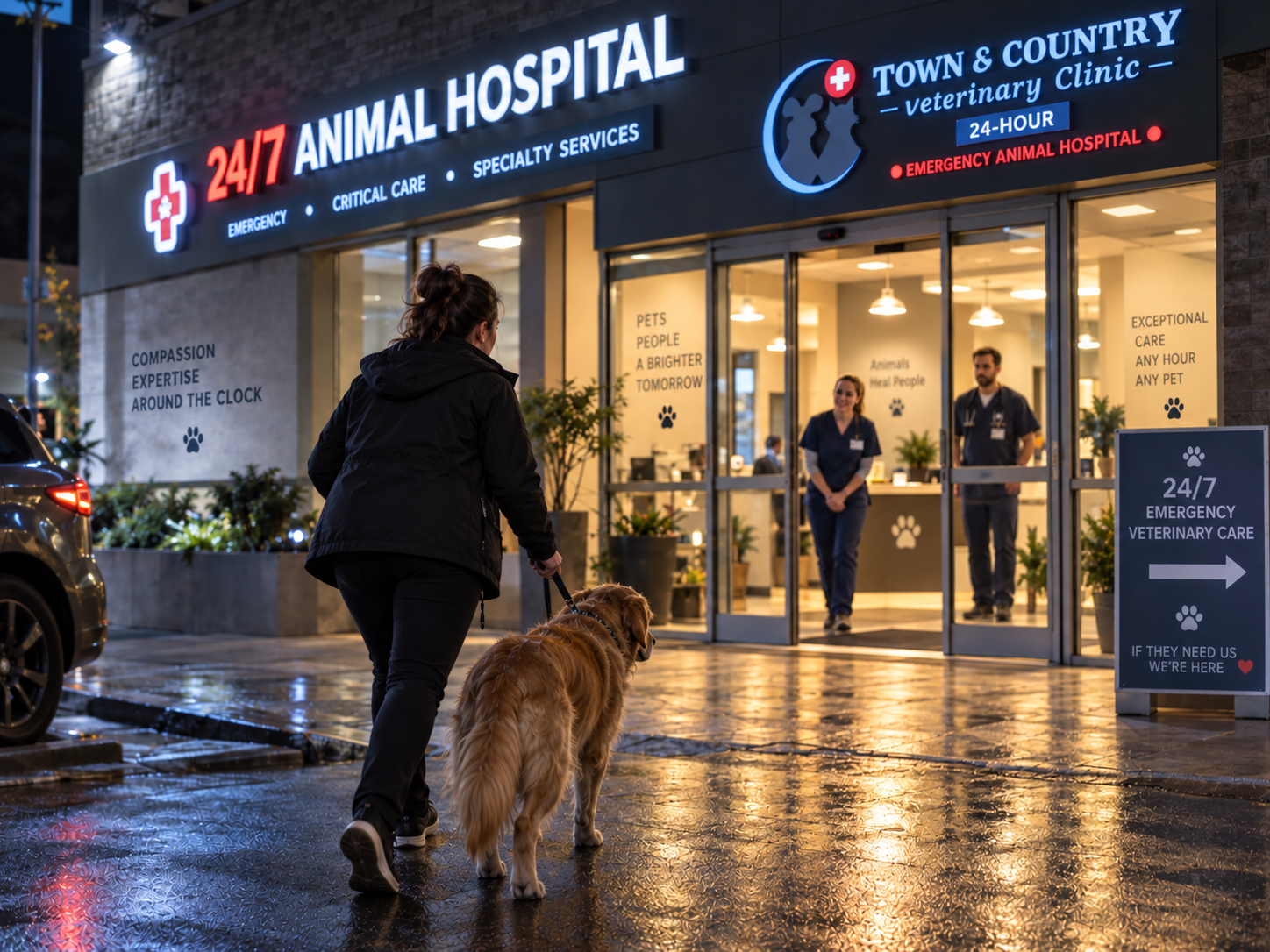 A 24hr emergency vet is a veterinary service equipped to treat serious illness or injury that cannot safely wait for a routine appointment. Pet owners can prepare by learning emergency warning signs, saving the nearest hospital’s contact details, keeping medical information accessible, and knowing how to transport an injured animal safely.